Visconti in Spoleto
Luchino Visconti in Spoleto: Rare Photographs by Francesco Carlo Crispolti on Display in Viterbo
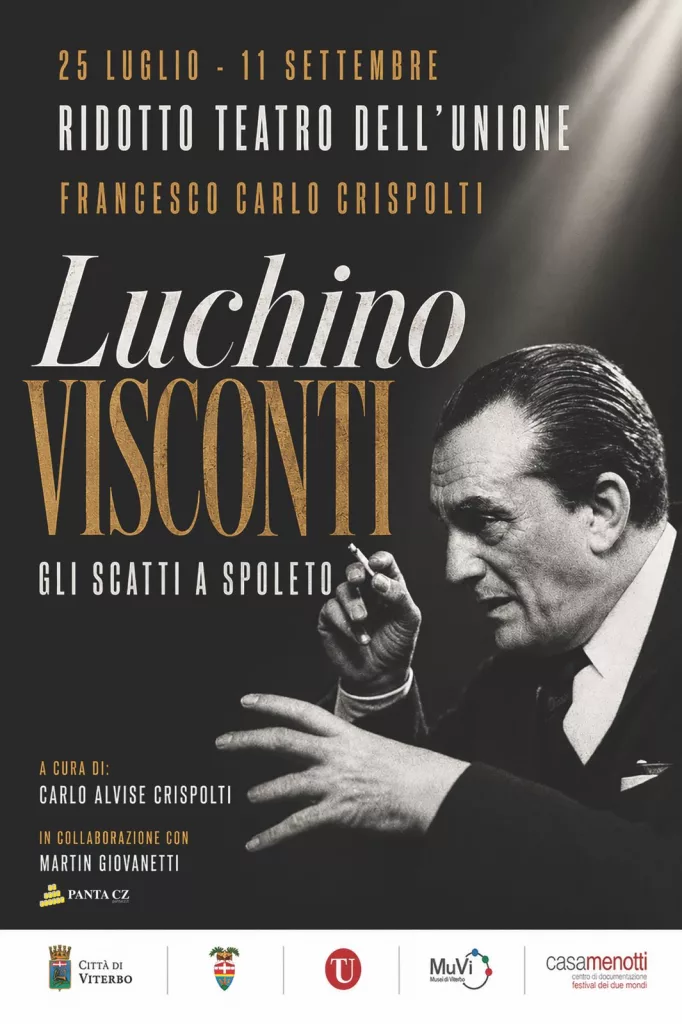
Curated by Carlo Alvise Crispolti, in collaboration with Martin Giovanetti
Ridotto del Teatro dell’Unione, Viterbo
July 25 – September 11, 2026
The connection between celebrated composer Gian Carlo Menotti, the city of Viterbo, and the birth of the Festival dei Due Mondi is a fascinating yet little-known story—one shaped as much by unrealized possibilities as by history itself.
Today, the Festival is inseparably associated with Spoleto, but the Umbrian town was chosen only after Menotti carefully explored several locations, including Viterbo, which was among the first cities considered for the ambitious international event.
In the mid-1950s, Gian Carlo Menotti, already one of the most acclaimed composers in the United States and a two-time Pulitzer Prize winner, envisioned a major festival that would serve as a cultural bridge between Europe and America—the “Two Worlds.”
Rather than selecting a large city such as Rome, Florence, or Venice, Menotti sought a smaller historic town rich in architectural beauty, intimate in scale, and capable of transforming its streets and squares into open-air stages.
Viterbo immediately captured his imagination. The medieval district of San Pellegrino, the imposing Palazzo dei Papi, and the city’s monumental squares and fountains appeared to offer the ideal setting for the new festival. Ultimately, however, the project never came to fruition due to two main factors: the lack of suitable theatrical infrastructure and political and bureaucratic skepticism.
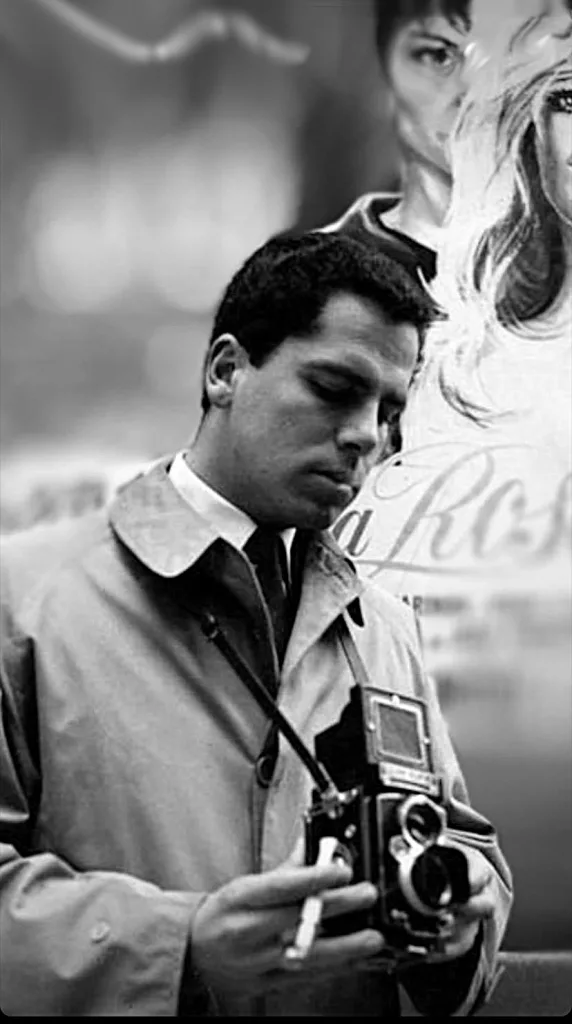
Over the decades, many photographers have documented the Festival dei Due Mondi, among them Lionello Fabbri and Francesco Carlo Crispolti, whose private archive has become an invaluable visual record of the Festival’s history.
This exhibition, hosted in the elegant Ridotto del Teatro dell’Unione and previously presented with great success at Casa Menotti in Spoleto, was inspired by that remarkable legacy. Special thanks are extended once again to Maria Flora Monini, President of the Fondazione Monini, and to Antonella Colosi for their invaluable support and collaboration.
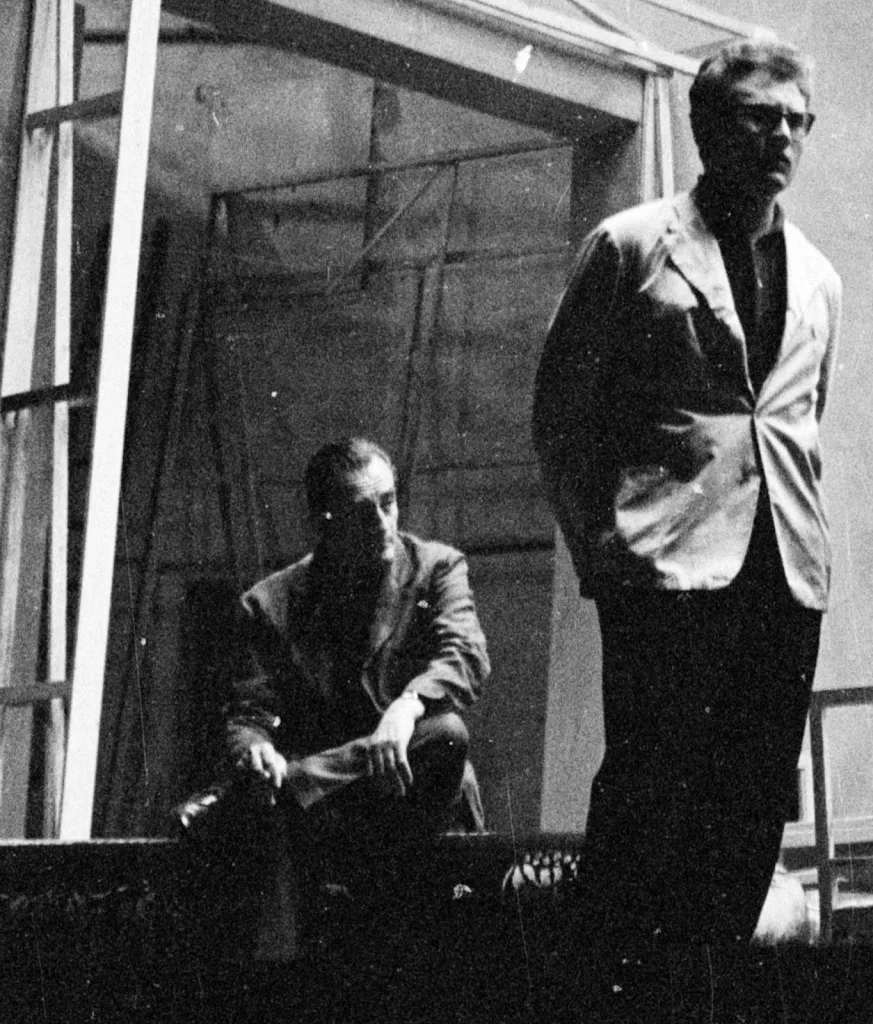
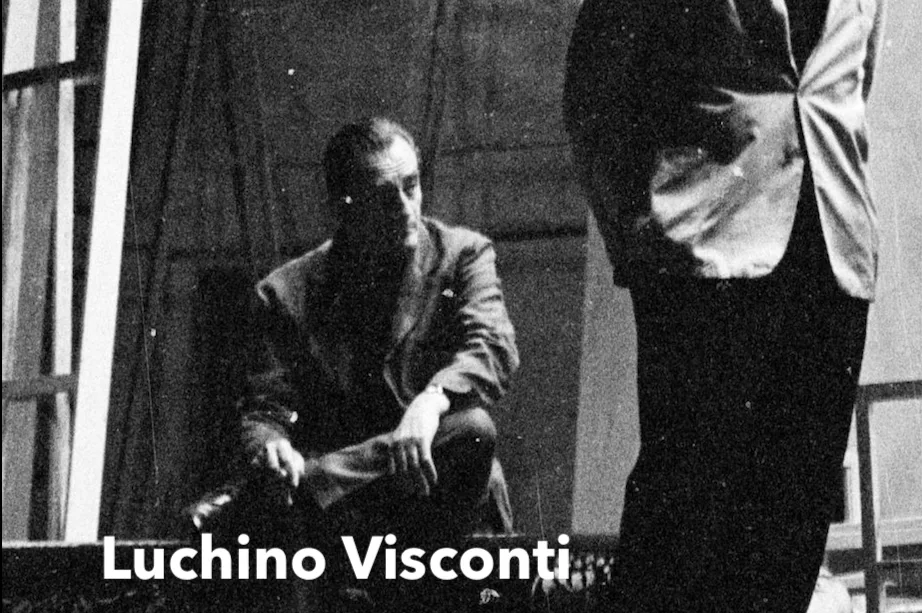
Dedicated to Luchino Visconti (Milan, November 2, 1906 – Rome, March 17, 1976), the exhibition presents a selection of previously unseen photographs alongside original archival materials from the period. The images were taken during rehearsals for La Traviata, directed by Visconti at the Festival dei Due Mondi in 1963. Five years earlier, in 1958, Visconti had inaugurated the Festival with Verdi’s Macbeth.
These photographs belong to an era when cameras were entirely mechanical and every shutter click echoed through the silence of rehearsals. Working in those conditions, Francesco Carlo Crispolti captured a series of extraordinary behind-the-scenes moments inside the Teatro Nuovo Gian Carlo Menotti. Just a few days later, on June 20, the production would make its debut.
The original negatives remained carefully stored in archival sleeves for more than sixty years without ever being printed, making these photographs entirely unpublished until now. During their recent digitization, curator Carlo Alvise Crispolti deliberately chose not to alter the images in any way, allowing viewers to experience them exactly as they have been preserved on the original negatives. The only contemporary element is the printing technology itself.
Taken from a low vantage point during afternoon rehearsals, the photographs feature cast members Franca Fabbri, Franco Bonisolli, and Mario Basiola, together with conductor Carlo Felice Cillario, supporting performers, and extras. These are not carefully composed publicity photographs but spontaneous documentary images that capture Visconti during a coffee break, giving instructions to the singers, and the expressive gestures of conductor Cillario. They offer an authentic glimpse into a time when each roll of film contained only 36 exposures and every photograph had to be carefully considered before pressing the shutter.
The exhibition also includes enlarged reproductions illustrating Francesco Carlo Crispolti’s meticulous photographic archiving system, providing visitors with further insight into his working method.
Special thanks are extended to the Municipality of Viterbo, the Province of Viterbo, Deputy Mayor and Councillor for the European Capital of Culture Alfonso Antoniozzi, the entire staff of Teatro dell’Unione, Martin Giovanetti for archival research, Oberdan Mancini for the video production, Maurizio Duka Moroni for the soundtrack, and Emanuela Sciattella, Antonio Obino, and PantaCZ for their collaboration and continued support.
“These photographs show Luchino Visconti at work, and for a man of the theatre there is no better way to remember him,” says Deputy Mayor Alfonso Antoniozzi. “I am especially pleased that Carlo Alvise Crispolti has chosen to share with Viterbo these extraordinary photographs taken in Spoleto by his father, Francesco Carlo Crispolti, during the rehearsals for La Traviata in 1963. They return to the public images that document a unique and unforgettable moment in Italian cultural history, while offering us the rare opportunity to witness a great artist in the act of creation, reminding us that genius is never accidental—it is the result of dedication and hard work.”
Visitor Information
The exhibition is open Tuesday through Saturday, from 10:00 am to 1:00 pm (last admission at 12:30 pm) and from 3:00 pm to 7:00 pm (last admission at 6:30 pm).
Admission is free.