Sant’Ignazio di Loyola
Sant’Ignazio di Loyola, Rome. A church of illusion and Light
Tucked just a few steps from the Pantheon, the Church of Sant’Ignazio di Loyola is one of Rome’s most breathtaking surprises. From the outside, it appears calm and restrained, its 17th-century Baroque façade simple, almost modest, built of pale stone with classical pilasters and a quiet sense of balance. Nothing prepares you for what waits inside.
The moment you cross the threshold, the space seems to open into infinity.
An interior that defies reality
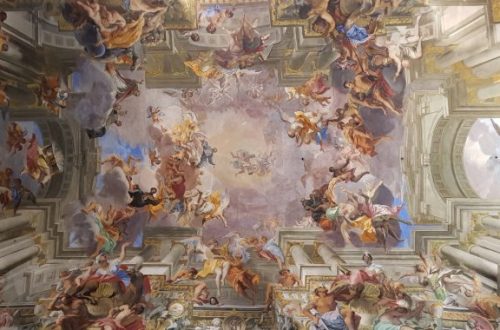
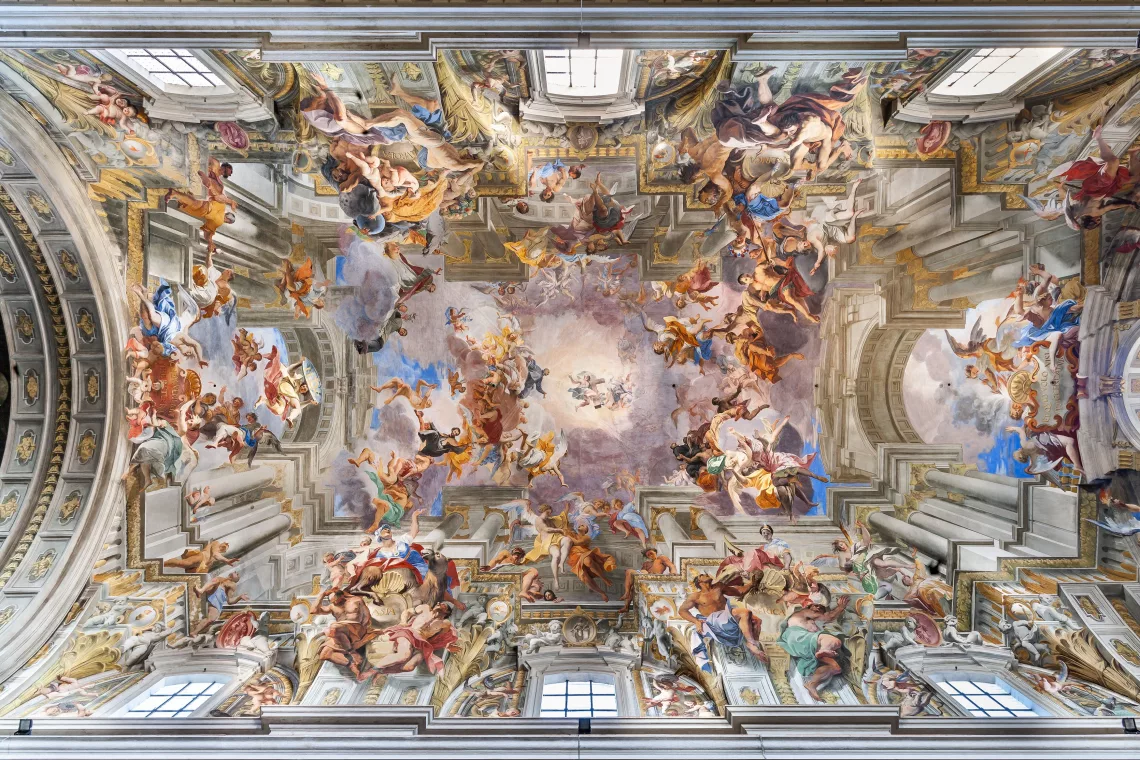
The church is famed for its extraordinary illusionistic ceiling, painted by the Jesuit artist Andrea Pozzo between 1685–1694. At first glance, you believe you are looking up into a vast open sky where Saint Ignatius rises toward heaven, carried by clouds, light, and angels. But this “dome” and soaring architecture are entirely flat, pure paint on plaster.
Pozzo’s masterpiece uses trompe-l’œil (optical illusion) to create imagined columns, arches, and heavenly depth. Light appears to pour down from an invisible opening in the roof. As you move across the floor, the perspective shifts dramatically, revealing how carefully calculated every angle is. There is even a small marble disk in the nave marking the perfect viewing spot from which the illusion works flawlessly.
The Famous “False Dome”
One of the church’s most delightful deceptions is its painted dome. Originally, the church was meant to have a real cupola, but lack of funding ended the plan. Pozzo solved the problem with genius: he painted a dome so convincing that for many visitors, the illusion lasts several seconds before the truth reveals itself. It is one of the most celebrated visual tricks of Baroque Rome.
Light, Gold, and Jesuit Grandeur
Beyond the ceiling, the church glows with warm golds, soft marble, and rich decoration. Side chapels dedicated to Jesuit saints are filled with sculptures, gilded altars, and dramatic contrasts of shadow and illumination. Everything is designed to draw the eye upward—toward transcendence, toward heaven.
The architecture itself follows the ideals of the Jesuit Baroque style: clear lines for preaching, an unobstructed nave for gathering worshippers, and explosive visual drama to stir faith and emotion.
The Atmosphere
Despite its artistic splendor, Sant’Ignazio never feels like a museum. Voices echo softly, candles flicker near altars, and visitors instinctively lower their voices when they enter. It is both a theatrical triumph and a living place of worship—a space where illusion, devotion, and architecture meet.
Standing beneath the ceiling, many people instinctively stop in silence, necks tilted back, unsure where the real architecture ends and the painted heaven begins.