San Paolo fuori le Mura
San Paolo fuori le Mura: A Monument of Faith and History in Rome
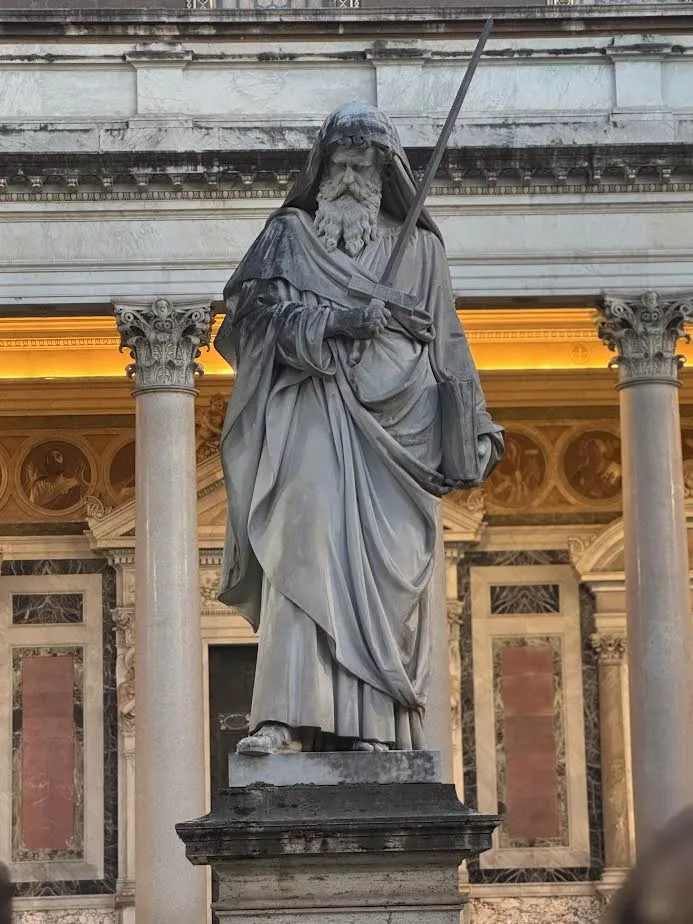
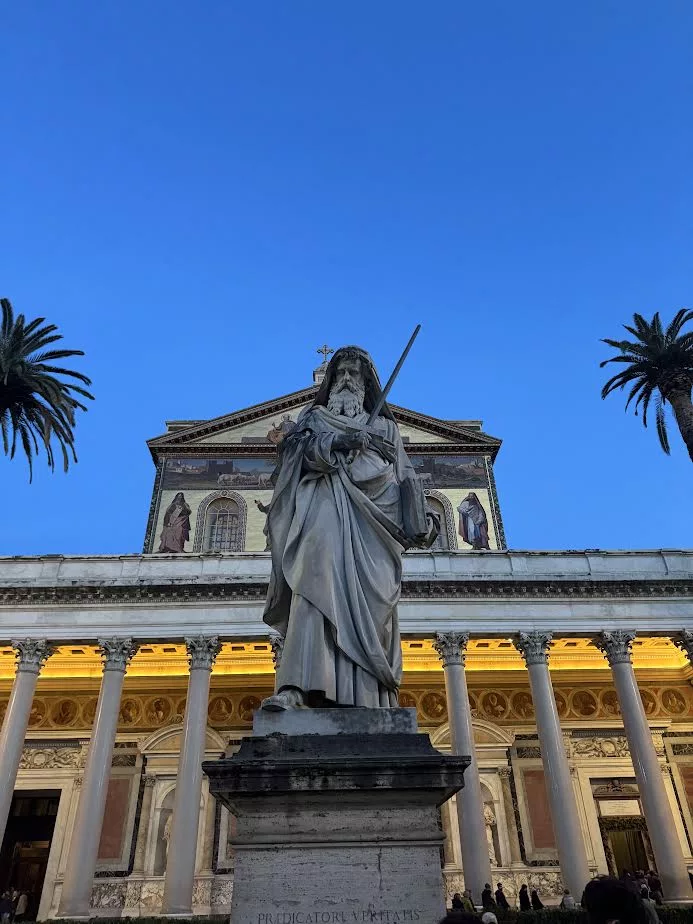
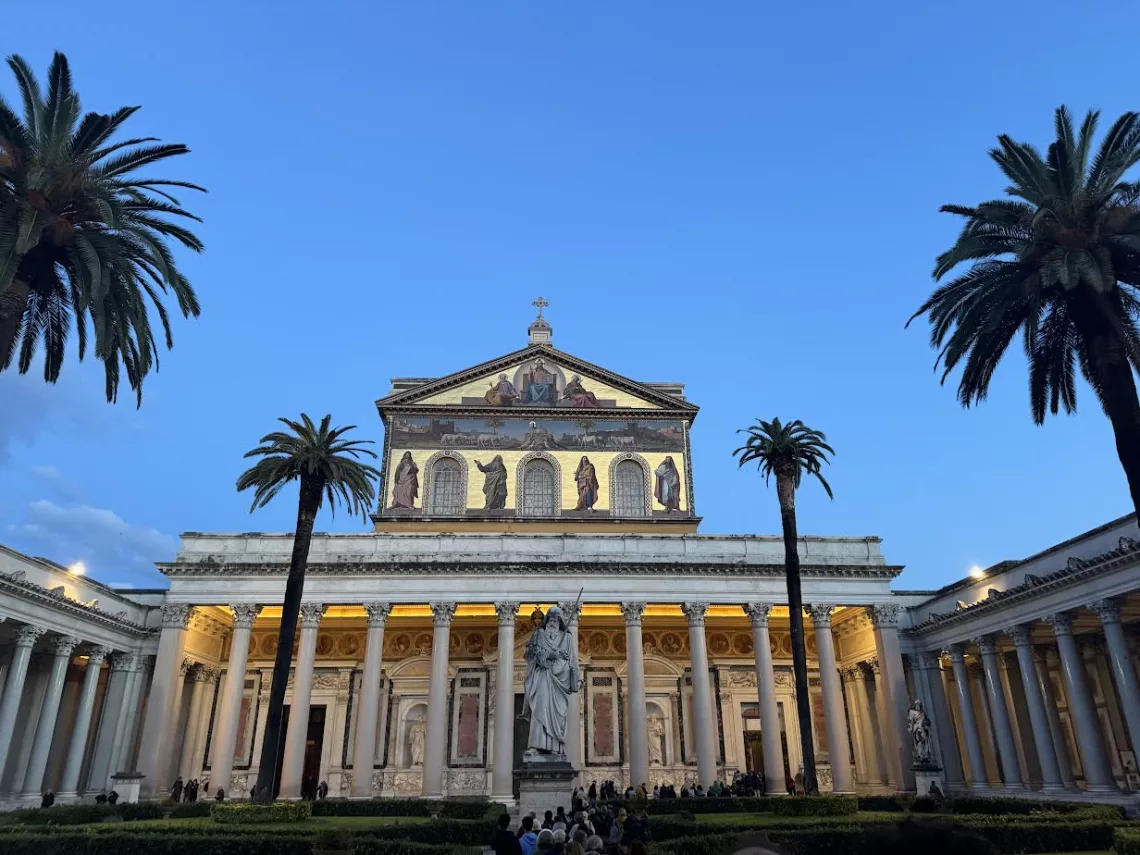
The Basilica of San Paolo fuori le Mura (Saint Paul Outside the Walls) is one of the most important and impressive churches in Rome. As one of the four Papal Basilicas, it holds deep religious, historical, and artistic significance, standing as a powerful symbol of early Christianity and continuity of faith across centuries.
The basilica is located just outside the ancient Aurelian Walls, along the road that once led to the port city of Ostia. According to tradition, it was built over the burial place of Saint Paul the Apostle, who was martyred in Rome around 67 AD. Shortly after his death, Christians began venerating the site, and in the 4th century, Emperor Constantine ordered the construction of the first basilica to honor the apostle.
Due to the growing number of pilgrims, the original structure was expanded at the end of the 4th century by Emperors Valentinian II, Theodosius I, and Arcadius, creating one of the largest churches in the Christian world. For centuries, San Paolo fuori le Mura remained a major destination for pilgrims traveling to Rome.
In 1823, a devastating fire destroyed much of the ancient basilica. The reconstruction, completed in the mid-19th century, was carried out with extraordinary care to preserve the original design and spirit of the early Christian building. Contributions came from across Europe and beyond, making the basilica a truly international project. While much of what we see today dates from this reconstruction, important original elements were saved or faithfully restored.
Architecturally, the basilica is renowned for its majestic five-nave interior, supported by long rows of classical columns that lead the eye toward the triumphal arch and the apse. One of its most distinctive features is the series of medallion portraits of all the popes, from Saint Peter to the present day, displayed above the columns. According to tradition, when space for these portraits runs out, the end of the world will come, a legend that adds to the basilica’s mystique.
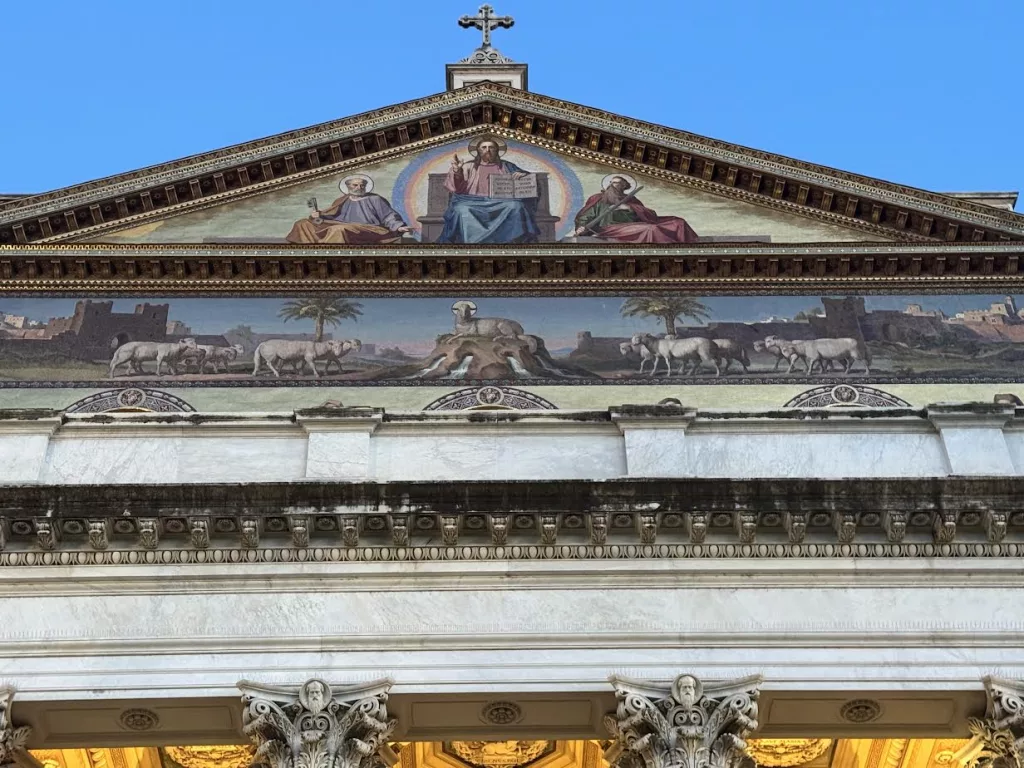
The apse mosaic, originally from the 5th century and later restored, depicts Christ flanked by Saint Peter and Saint Paul, emphasizing the basilica’s apostolic foundation. Beneath the high altar lies the tomb of Saint Paul, marked by an ancient marble sarcophagus. Modern archaeological studies have confirmed the presence of a first-century tomb beneath the altar, reinforcing the site’s historical authenticity.
Adjacent to the basilica is the Benedictine monastery and cloister, one of the finest medieval cloisters in Rome. Built in the 13th century, it features beautifully decorated twisted columns with colorful inlays, offering a quiet and contemplative space that contrasts with the basilica’s grandeur.
Today, San Paolo fuori le Mura remains an active place of worship and a destination for visitors from around the world. It plays a significant role in ecumenical dialogue, particularly during the Week of Prayer for Christian Unity, reflecting Saint Paul’s universal message of faith and reconciliation.
More than a monument, San Paolo fuori le Mura is a living testimony to Rome’s spiritual heritage, where history, art, and devotion meet in a timeless expression of peace and unity.
Article offered by Basilio 55 Rome