


Walking Through Time on the Via Appia Antica, Rome
There are places in Rome where history feels curated, museums, monuments, and ruins framed by ticket lines and velvet ropes. And then there is the Via Appia Antica, where history lies directly under your feet, uneven and unapologetically real.
Built in 312 BC, the Via Appia Antica was once known as Regina Viarum, the Queen of Roads. It connected Rome to the south of Italy and became a vital artery for trade, troops, and ideas. Today, it offers something far rarer: silence, space, and a powerful sense of continuity.
A Road Best Explored Slowly
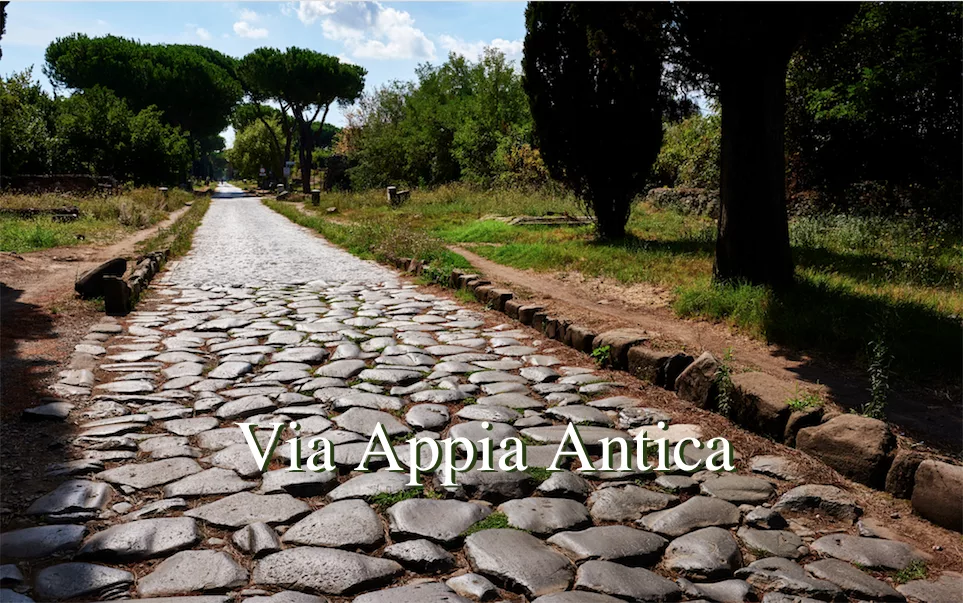
The first thing you notice is the pavement. Massive basalt stones, smoothed by centuries of chariot wheels and footsteps, form a road that refuses to be tamed. Walking here requires attention, each step slightly uneven, forcing you to slow down. It’s a gift in a city that often overwhelms.
On weekends, much of the road is closed to traffic, and the Via Appia Antica becomes a peaceful corridor shared by walkers, cyclists, and the occasional curious cat sunbathing on ancient stone.
Tombs, Pines, and Echoes of the Past
Flanking the road are mausoleums, ruins, and umbrella pines that seem almost staged in their perfection. The most striking is the Mausoleum of Cecilia Metella, a massive circular tomb that dominates the landscape like a silent guardian. Nearby, fragments of inscriptions and broken columns remind you that this was once a prestigious address for Rome’s elite, because even in death, location mattered.
Hidden just off the road are the early Christian catacombs, including the Catacombs of San Callisto, where narrow tunnels tell stories of faith, secrecy, and resilience beneath the earth.
Nature Reclaims the Empire
What makes the Via Appia Antica truly special is not just its age, but its atmosphere. Wildflowers grow between the stones. Sheep occasionally graze nearby. Birds replace traffic noise. It feels less like a ruin and more like a living landscape, one where nature has gently reclaimed empire.
Despite being only a few kilometers from the center of Rome, the Via Appia Antica feels worlds away. It’s Rome exhaling.
Practical Tips for Visiting
- Best time to go: Early morning or late afternoon, especially on Sundays
- How to explore: Walking or renting bikes near the entrance
- What to bring: Comfortable shoes (essential), water, and curiosity
- Don’t rush: This is not a checklist destination, wander, pause, sit on a stone
Why It Stays With You
The Via Appia Antica doesn’t shout for attention like the Colosseum or the Trevi Fountain. Instead, it whispers. It invites you to imagine footsteps before yours, those of soldiers, pilgrims, merchants, and mourners, and to realize that you are briefly part of a story that has been unfolding for over two thousand years.
In a city of wonders, the Via Appia Antica may be Rome’s most poetic walk, one where the past is not behind glass, but right beneath your soles.
Article offered by Basilio 55 Rome

