


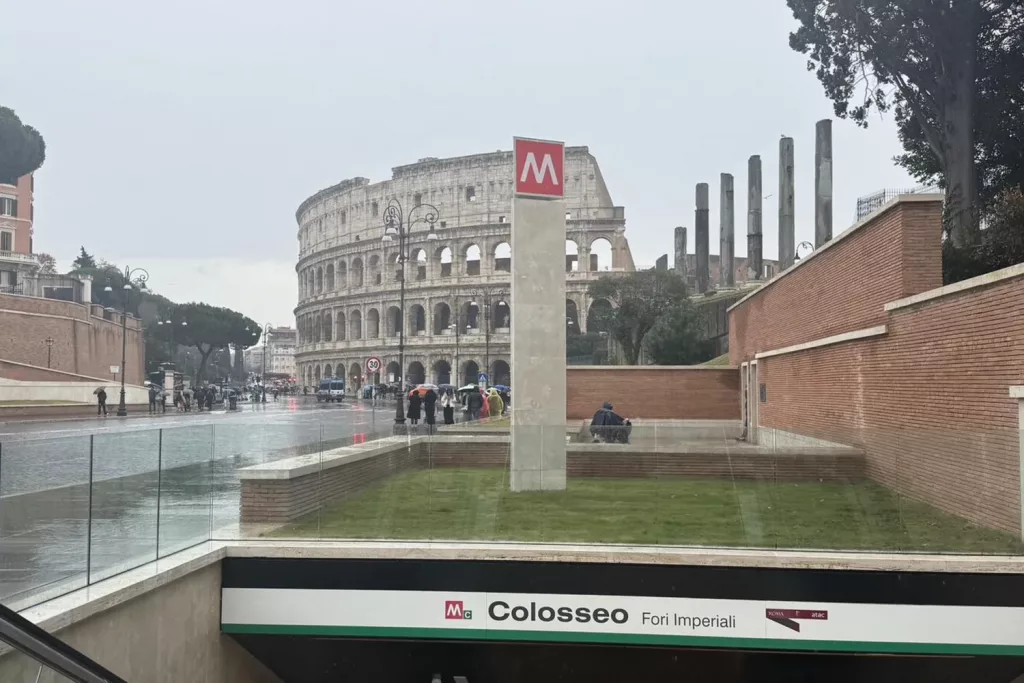
Absolutely! The new Colosseum metro station, which opened as part of the extended Line C, is not just a typical metro stop; it is designed as a museum station that blends modern infrastructure with Rome’s deep historical significance. This station combines artistic and archaeological elements, reflecting the city’s heritage while enhancing its transit system. Let’s take a closer look at the museum aspects of the station.
The Museum Concept at Colosseum Metro Station
The Colosseum metro station was conceived as a “museum station,” meaning that it isn’t only a point of transport but also a space that enhances the visitor experience by showcasing elements of Rome’s rich cultural and historical past.
Archaeological Artifacts and Displays
One of the key features of the Colosseum metro station is its integration with the history of the area. During construction, the station became a sort of archaeological site, with several important discoveries made in the vicinity, including remnants of ancient Roman walls, cisterns, and even parts of early Christian buildings. As a result, some of these artifacts have been preserved and are now displayed within the station itself.
Visitors can walk through the station and view these artifacts, which serve as a poignant reminder that this modern transit space is situated on land rich in ancient history. The station includes a small archaeological exhibition that showcases these relics, providing an educational experience that ties the past with the present.
The artifacts on display include:
-
Roman walls: Pieces of ancient Roman structures that were uncovered during excavation.
-
Cisterns: Sections of ancient water storage systems, revealing how the Romans managed their water supply.
-
Mosaic fragments: Portions of Roman mosaics, offering insight into the artistic style of the period.
The Design of the Station: An Artistic Fusion
The design of the Colosseum metro station itself is a blend of modern architecture with elements that evoke the grandeur of ancient Rome. The space was designed with the aim of making the transit experience a part of the city’s cultural journey.
-
Aesthetic influences: The station is adorned with decorative elements that reference ancient Roman architecture, such as columns and arches, creating an atmosphere that recalls the imperial power of the Roman Empire.
-
Lighting and materials: The use of marble, stone, and other materials in the design echoes the aesthetic of ancient Roman buildings. The lighting is designed to mimic the soft glow of ancient lamplights, further enhancing the historical ambiance.
Interactive Experiences for Visitors
The Colosseum metro station isn’t just a place to pass through; it’s designed to engage visitors through interactive digital displays. These touchscreens and multimedia stations allow travelers to learn more about the history of the Colosseum, the Roman Empire, and the local area as they wait for their trains.
The interactive displays cover topics such as:
-
The history of the Colosseum: From its construction in AD 70-80 to its role in Roman society, including its use for gladiatorial contests and public spectacles.
-
Ancient Roman technology: Exhibits showcasing how the Romans built and engineered their cities, including the development of roads, aqueducts, and other infrastructure.
-
The history of the metro project: An explanation of how the station was built, including the archaeological digs and the modern technologies used.
Educational Programs and Tours
Given the station’s unique connection to Rome’s historical landscape, there are plans to offer educational programs and guided tours that explain both the artifacts on display and the broader significance of the Colosseum and its surroundings.
These tours will not only take visitors through the archaeological site beneath the station but also through the greater historical context of Rome’s metro system, which was a challenge to implement in a city with such a rich history. These educational opportunities will provide a deeper understanding of the station’s role as a bridge between ancient and modern Rome.
Incorporating the Colosseum’s Legacy into Modern Travel
The station’s museum features reinforce the importance of integrating history with modern urban development. While many transit systems around the world work to update and expand their networks, few cities have the challenge of combining the needs of modern travel with preserving historical landmarks like Rome.
The Colosseum metro station, with its museum elements and historical integration, serves as a remarkable example of how cities can embrace their heritage while moving into the future. It’s a multi-dimensional experience for commuters and tourists, making it much more than just a place to catch a train; it’s a part of Rome’s ongoing journey of preserving and celebrating its ancient history while welcoming modern advancements.
A Hub for Cultural and Tourist Activities
The new station is more than just a transportation hub; it’s part of the broader Cultural District of Ancient Rome. With the Colosseum, Roman Forum, and Palatine Hill all nearby, the metro stop functions as a gateway to one of the most important archaeological sites in the world.
The creation of this museum station is in line with Rome’s efforts to maintain its historical sites while improving accessibility. As part of this, the Colosseum stop is expected to draw more visitors to the entire archaeological area, encouraging longer stays and deeper exploration of the surrounding monuments.
In short, the Colosseum metro station is a perfect fusion of modernity and history. It enhances the visitor experience, offering a unique opportunity to learn about ancient Rome without get outside the station. This museum-style integration of history into the metro system not only improves the flow of tourists but also showcases the ingenuity of blending modern infrastructure with the preservation of cultural heritage. Whether you’re taking a train to your next destination or just exploring the station itself, it’s an experience that adds another layer to your visit to Rome.


Article offered by Basilio 55 Rome

